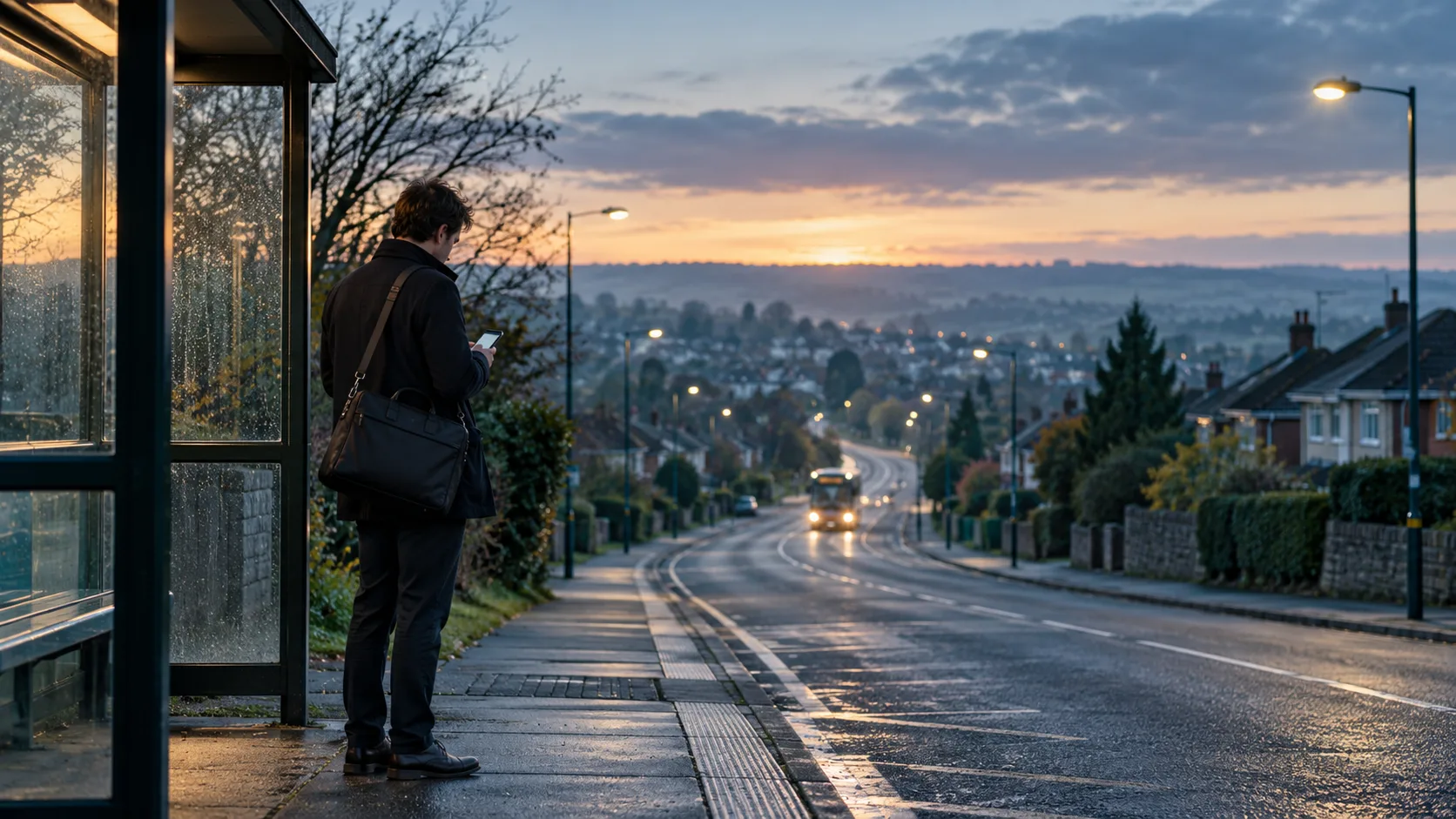
Waiting for the bus used to count as part of the working day.
The Commute Is Part of the Working Day, Even If Nobody Pays You for It
On this page
I think people underestimate how much of the working day is not actually work. The obvious example is the commute.
Some people reading that will immediately think:
I don't underestimate it. What are you talking about?
Fair enough. But I think a lot of us still mentally separate "work" from "getting to work," even though one does not happen without the other. For years, I barely thought about that distinction.
My first commute was actually pretty reasonable
Back in the day I worked in a factory making bedroom furniture. The bus came every eight minutes — well, officially every eight minutes. In reality it was often late enough that it basically became every ten. The factory was about a thirty-minute bus ride away, with roughly five minutes of walking at either end. Honestly, that is not a bad commute. But it still adds time.
Nobody pays you for the walk to the bus stop. Nobody pays you while you sit on the bus. Nobody pays you for the walk at the other end. And after a physically heavy day, that journey home could feel much longer.
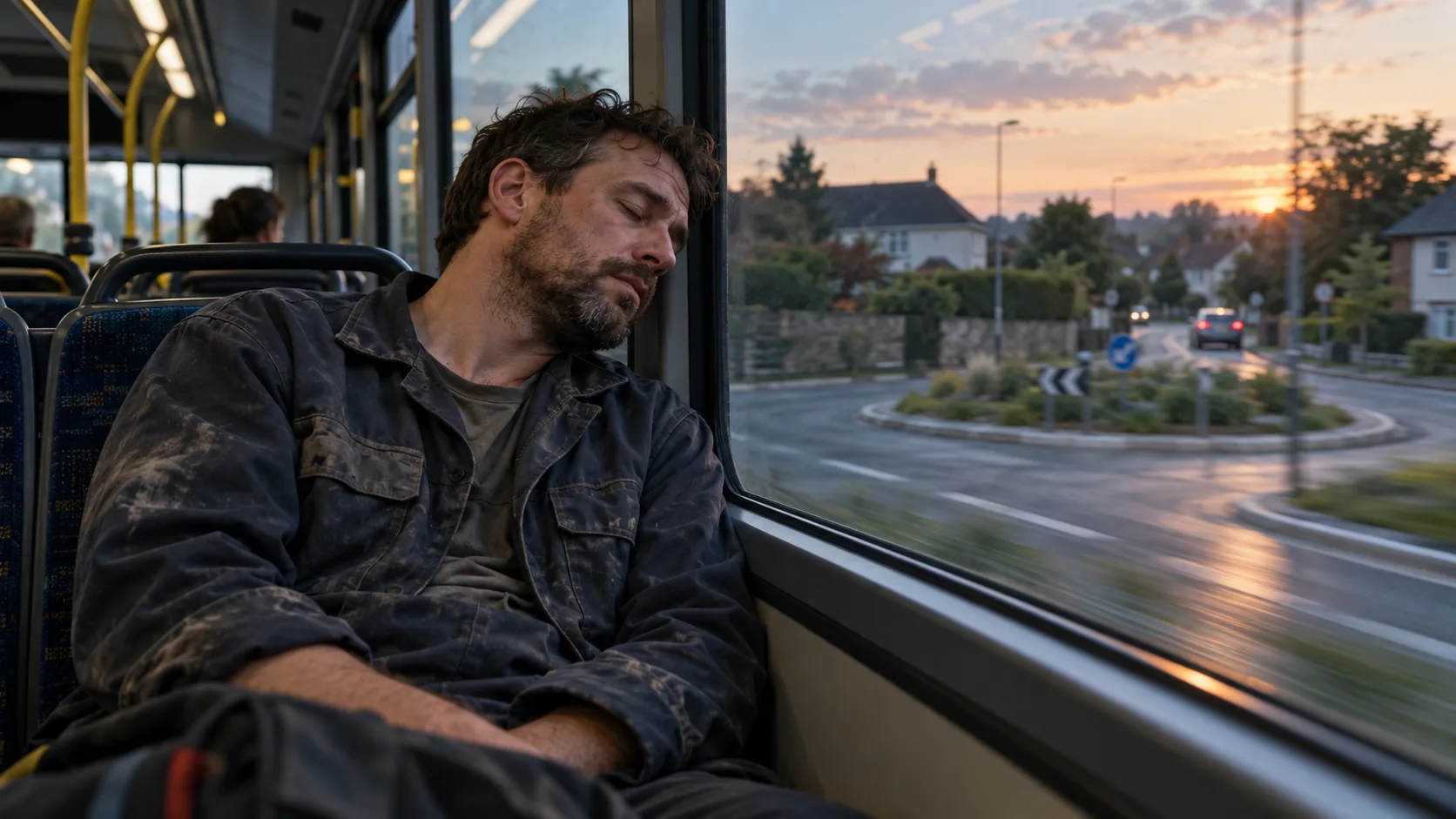
More than once I fell asleep on the bus and missed my stop. For some reason I would always wake up at exactly the wrong moment, just after we had crossed the roundabout past my house. Never before. Always after. So then I would jolt awake, get off at the next stop, and walk back. Not exactly a tragedy, but it is part of the day.
An illustration of the old commute that ate the edges of the day.
Then I discovered working online
When I moved here, I started working online. No commute — technically there was one: kitchen to the Dev Den. That was about it. And suddenly the entire structure of the day changed, especially when you make your own hours, or work for a different timezone. You can spend half the morning relatively relaxed because your working day does not necessarily start at the same time as everyone around you.
At one point I was working for a rather angry and difficult client in the EST timezone. There became an unofficial daily challenge:
Can we log out before he wakes up?
Sometimes, yes. Sometimes, no. If we failed, there was always the risk of getting pulled into a lesson, a meeting, or some sudden all-hands situation. So we tried to start early enough to finish before that happened. That sometimes meant starting around 6am our time — which, unsurprisingly, gets tiring. Tiring enough that turning the camera off and having a small tactical snooze during a lesson started to look quite appealing.
Remote work removes the commute. It does not automatically remove the weirdness.
Then I went back to a "proper job"
When my first child was about to be born, I wanted something more formal. Proper employment. Taxes handled properly. Pension. Healthcare. The boring grown-up things that suddenly feel much more important when there is a child on the way. At the time, that meant an office job.
This was also coming not too long after the whole COVID period, so remote work was already much more normal than it had been before. But this job was still office-based at first. And the commute was much worse than the factory one. I would get a bus at around quarter to seven in the morning and get to work at roughly 8am. That part was manageable. The journey home was the problem.
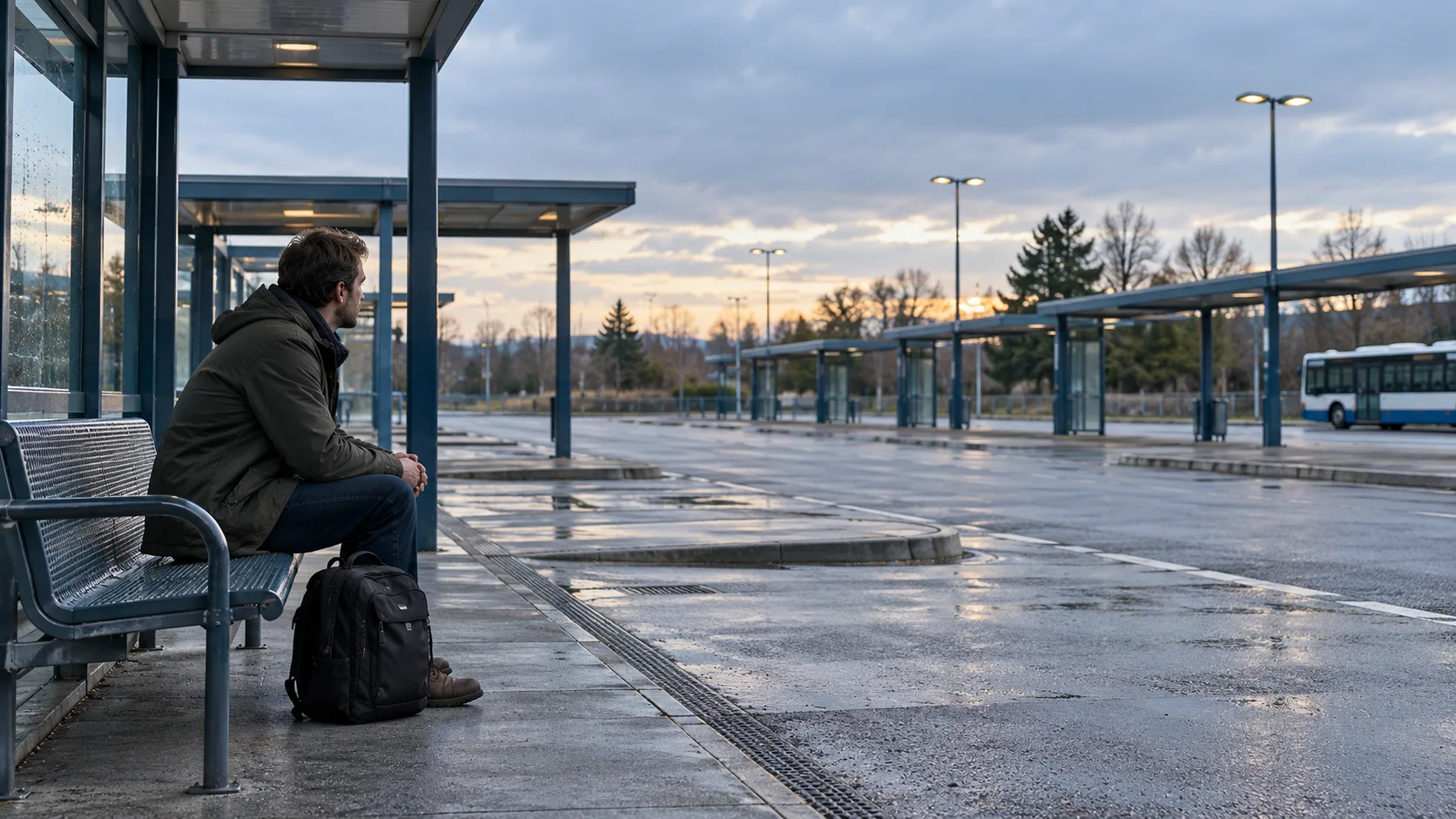
Forty minutes standing at a bus depot is still part of your day
Where I live now, buses are not every eight minutes. The specific bus back to my village is roughly once an hour. There are even parts of the day when it skips the route entirely. So I would finish work, head to the bus depot and quite often arrive just after the bus had gone.
Could I have made it? Technically, maybe — if I sprinted down the final road every afternoon. But I do not particularly want to finish eight hours of work and then start doing interval training because public transport schedules and office hours have entered into an alliance against me. So instead I would stand there. Sometimes for forty minutes. Doing nothing. Waiting. Nobody pays for that either.
Eventually the bus comes, and the waiting becomes its own kind of work.
Eventually the bus comes. The journey itself is actually quite pleasant — you have your music, you have your thoughts, nobody needs anything from you for a while. But by the time I got home, it could be almost 6pm. Leave around 6:45 in the morning. Get home around 6. That is getting very close to a twelve-hour day. Yet the payslip says eight hours. That difference is difficult to ignore once you start thinking about it.
Remote work gave me those hours back
Now I have the same concept of a proper job — formal employment, benefits, all the administrative grown-up stuff — but it is 100% remote. That is a pretty sweet deal. And if I had to choose one practical reason why I like remote work so much, eliminating the commute would be very high on the list.
Those hours come back. Not theoretically. Literally. I can wake up later. I can see my family more. I can finish work and already be home. There is no depot, no missed bus, no forty-minute punishment for leaving the office three minutes too late. That has real value.
An illustration of the trade: no commute, and work still begins at home.
But the commute was not completely worthless
Here is where it gets less simple. I do sometimes miss it — not enough to volunteer for it every morning, but parts of it. Going outside every day because you have somewhere to be. Seeing people. Walking around. Getting a bit of accidental movement. Stopping at a bakery and buying some completely unnecessary snack. Nipping into a shop on the way home and getting a little chocolate gift for your wife.
Those things disappear when your commute is ten steps across the house. You can still go outside, obviously. I do. But it is different when it is built into your day automatically. The commute was unpaid and mandatory. But that does not mean every second of it was miserable.
And then there is the social side
This part depends massively on the person. Personally, I am not exactly devastated about losing office small talk. I do not need somebody asking me what I did at the weekend while I am trying to make coffee. Remote work suits me pretty well in that sense.
But I know plenty of people genuinely liked that side of working somewhere physical — the quick chat in the kitchen, the water cooler conversation, seeing somebody walk past and remembering something you wanted to ask them, just being around people. We have probably been doing versions of that forever. Even at school you would invent reasons to get up. Suddenly your pencil desperately needed sharpening at the bin because your friend was over there and you wanted thirty seconds to talk. You know who you are.
Remote work removes a lot of that incidental interaction. For some people that is wonderful. For others it is probably the worst part.
Should commuting time be compensated?
This is the question I keep coming back to. If my employer requires me to be in a specific building, and getting to that building adds three hours to my day, is that really completely separate from work?
Legally and practically, we normally treat it that way. Your commute is your problem. Your working day starts when you arrive. But from the employee's point of view, the distinction feels a little artificial. I am not standing at that bus depot because I fancied visiting it. I am there because my job required me to travel somewhere.
At the same time, I understand why directly paying everyone for their commute becomes messy very quickly. Someone chooses to live ten minutes away. Someone else chooses to live ninety minutes away. Do you pay them differently? Do you set a cap? Does driving count differently from public transport? What if somebody moves farther away after getting the job? It gets complicated fast.
So I do not think the answer is necessarily as simple as:
Employers should pay everyone from the moment they leave their front door.
But I do think commuting time should be treated as a real cost of a job — by employers, and by employees deciding whether a job is actually worth it.
An eight-hour job can easily take eleven hours
That is probably the part people should calculate more honestly. Salary is not the only number. If Job A pays slightly more but requires three hours of commuting every day, while Job B is remote, those jobs do not consume the same amount of your life. That matters.
You can even think of it as an effective hourly rate. An eight-hour day with three unpaid hours around it is not really taking eight hours from you. It is taking eleven. Maybe you still choose it — maybe the office is worth it, maybe you genuinely prefer being around people, maybe the commute is pleasant, maybe the career opportunity is much better. That is fine. But those hours should at least be part of the decision.
Remote work is not perfect, but the maths is hard to ignore
I do miss parts of going somewhere — the movement, the routine, the little stops along the way, occasionally even the people. But I do not miss losing hours every day simply getting to and from the place where I am allowed to start being paid. That is the biggest difference for me.
Remote work gives me back a chunk of the day that traditional office work quietly consumes. And once you have experienced both sides of it, that is very difficult to stop noticing. Maybe the commute does not need to appear on the payslip. But I definitely think it belongs in the calculation.